
Baccarat is famous for its low house edge and rapid pace. While it looks like a game reserved only for high rollers, it is actually one of the easiest casino classics to learn. Unlike blackjack, where you must make complex strategic decisions, baccarat runs entirely on an automated set of rules.
In this beginner-friendly guide, we will break down the exact baccarat card values, explain how hand scores are calculated, and show you how to read the table like a pro at premium online gaming hubs like Panalobet.
What Are Baccarat Card Values?
Understanding Baccarat Card Values
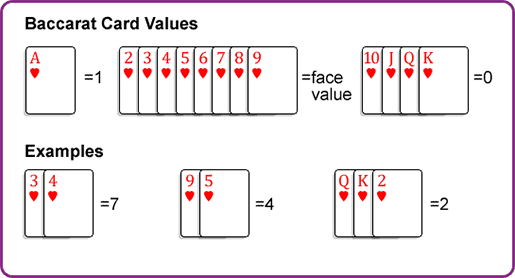
Baccarat card values are the point systems used to calculate the total score of a hand. In baccarat, cards 2 through 9 retain their face value, Aces are worth 1 point, and 10s along with all face cards (Jacks, Queens, and Kings) are worth exactly 0 points.
Why Card Values Are Important in Baccarat
Even though the dealer handles all the card distributions automatically, understanding how these values translate to scores is crucial. Knowing the card values allows you to follow the game flow effortlessly, keep track of your wagers, and understand why certain actions—like drawing a third card—occur during the game.
How Baccarat Scoring Differs From Other Card Games
In most card games, face cards are highly valuable and Aces are the strongest assets. In baccarat, this logic is completely flipped. Face cards have no value at all, and the ultimate goal is to get a hand total as close to 9 as possible.
The Official Baccarat Card Value Chart
Baccarat is played with standard 52-card decks. To compute your score, simply refer to these fixed card assignments:
How Baccarat Scores Are Calculated
Calculating a hand score in baccarat is incredibly straightforward once you understand the unique math engine of the game.
Adding Card Values Together
To determine the score, you start by adding the values of all cards dealt to a specific hand (either the Player or the Banker).
Understanding the Last-Digit Rule
The most important rule in baccarat math is that hand totals can never exceed 9. If the sum of the cards is a double-digit number (10 or higher), you drop the tens digit (the first digit) completely. The remaining single digit is the official baccarat hand score.
Why Hand Totals Never Exceed 9
Because of the last-digit rule, a hand total automatically resets once it reaches 10.
- If you are dealt an 8 and a 7, the sum is . Drop the “1”, and your final score is 5.
- If you are dealt a Jack and a 10, the sum is . Your final score is 0 (historically referred to as “Baccarat”).
Baccarat Card Value Examples
Two-Card Hand Examples
- 7 and Ace: . The hand score is 8.
- King and 9: . The hand score is 9.
- 8 and 6: . Drop the tens digit. The hand score is 4.
Three-Card Hand Examples
- 3, 4, and 9: . Drop the tens digit. The hand score is 6.
- Jack, Queen, and 5: . The hand score is 5.
- 9, 2, and 9: . Drop the tens digit. The hand score is 0.
What Is a “Natural” Win in Baccarat?
If either the Player or the Banker is dealt an initial two-card hand that totals 8 or 9, it is declared a Natural.
- Natural 9: The highest possible hand in the game. It instantly ends the round, beating any other hand total.
- Natural 8: The second-best hand. It instantly wins the round unless the opposing hand is a Natural 9.
When a Natural is rolled by either side, no third cards are drawn, and the hand is settled immediately.
How Card Values Affect the Third Card Rule
If neither side lands a Natural on the initial deal, the game may draw a third card. The drawing rules are entirely dictated by the starting totals:
Player Third Card Rules
The Player hand acts first and follows a simple protocol based on its two-card total:
- 0 to 5: The Player must Draw a third card.
- 6 or 7: The Player must Stand.
Banker Third Card Rules
The Banker’s actions are slightly more complex. If the Player stands on a 6 or 7, the Banker follows the exact same rules (draws on 0-5, stands on 6-7). However, if the Player draws a third card, the Banker draws or stands based on a combination of its own total and the value of the specific third card the Player received.
Common Baccarat Scoring Mistakes
- Forgetting Face Cards Count as Zero: Beginners often instinctively count Jacks, Queens, and Kings as 10 points. In baccarat, they are strictly worth zero.
- Miscalculating Double-Digit Totals: Do not panic if your cards add up to a high number like 17. Just remember to slice off the first digit to get your true score (7).
- Confusing Baccarat with Blackjack: In blackjack, going over 21 is a “bust” (an automatic loss). In baccarat, you can never bust—your score simply wraps back around to zero.
Tips for Memorizing Baccarat Card Values
- Group the Zeroes: Train your brain to see 10s, Jacks, Queens, and Kings as blank cards. They do not add anything to the hand value.
- Practice on trusted platforms: Log into a certified site like Panalobet to practice using free demo tables. Playing 20 to 30 practice rounds is the fastest way to master the visual pacing of baccarat calculations.
- Keep a Cheat Sheet Handy: While learning, keep our standard card value chart open on your phone or desktop for quick reference.
Baccarat Card Values vs. Blackjack
While both games are casino favorites, their mathematical structures are completely different:
The beauty of baccarat lies in its simplicity. By knowing that face cards are worth zero, Aces are worth 1, and any total over 9 drops its first digit, you have officially mastered the entire scoring system. Now that you know the math, you can head over to Panalobet, find a live dealer table, and enjoy one of the most exciting, low-house-edge card games in the world!