
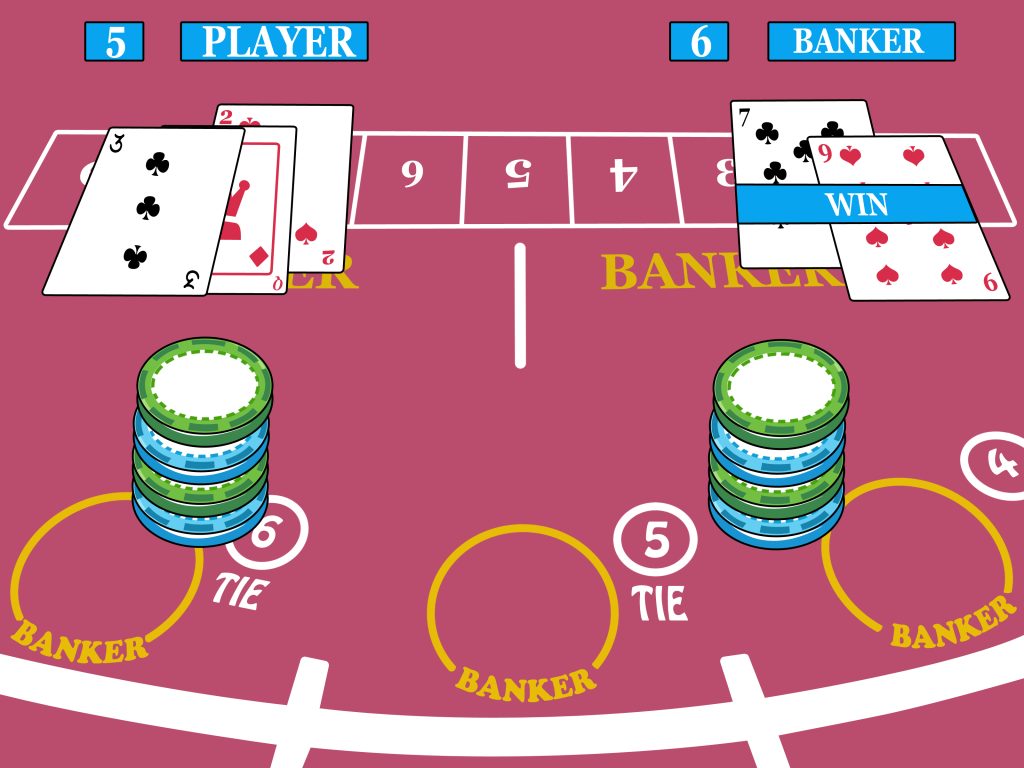
Baccarat has a long-standing reputation as the game of choice for high rollers and secret agents, but behind its glamorous velvet-rope persona lies one of the easiest and most player-friendly table games in the casino.
Unlike blackjack or poker, where your decisions directly alter the outcome of a hand, baccarat is entirely automated. Your only job is to pick a side and let the math do the work. Whether you are stepping up to a live table or logging into a premium digital platform like Panalobet, this complete beginner’s guide will walk you through the rules, card values, and optimal bets so you can play with total confidence.
What Is Baccarat?
A Brief Introduction to Baccarat
Baccarat is a classic card game comparing hands dealt to two positions on the table: the Player and the Banker. Originating in Europe before becoming a staple in Asian and global gaming capitals, the modern version played today is highly valued for its speed, elegance, and pure reliance on chance.
Why Baccarat Is Popular in Casinos Worldwide
The game’s global dominance boils down to two factors: simplicity and an incredibly low house advantage. Players do not need to memorize complex strategic charts or manage hand gestures; you simply place your chips down, relax, and watch the action unfold.
Understanding the Objective of Baccarat
The core goal of baccarat is simple: predict which of the two hands—the Player or the Banker—will finish with a point total closest to 9. You can also bet that both hands will result in an exact tie.
Baccarat Card Values Explained
Before learning how a round plays out, you must master baccarat’s unique scoring system. It does not score like traditional card games, and it completely throws out blackjack rules.
- Aces: Worth strictly 1 Point.
- 2 through 9: Worth their Face Value (e.g., a 7 is worth 7 points).
- 10s, Jacks, Queens, Kings: Worth 0 Points (often called “Monkeys”).
How Baccarat Scores Are Calculated
To determine a hand total, add the values of the individual cards together. However, a baccarat hand score can never exceed 9.If the combined sum of the cards reaches a double-digit number ( or higher), you automatically apply the Last-Digit Rule, dropping the tens column entirely. The remaining single digit becomes your true score.
Examples of Baccarat Hand Values:
- Hand A: A 4 and a 5. . The score is a perfect 9.
- Hand B: An 8 and a 7. . Drop the first digit (“1”). The score is 5.
- Hand C: A King and a 10. . The score is a 0 (historically called baccarat).
What Is a Natural 8 or Natural 9?
If either the Player or the Banker hand is dealt a total of 8 or 9 on the initial two cards, it is called a Natural. When a Natural occurs, the round ends instantly, no further cards are drawn, and the higher score wins.
How to Play Baccarat Step by Step
A standard game of baccarat moves through four clear stages:
Baccarat Betting Options, Odds, and Payouts
To maximize your efficiency, you need to understand the mathematical house edge attached to the three primary betting zones.
1. The Player Bet
Betting that the Player hand will beat the Banker.
- Payout: 1:1 (Even money. A $10 bet wins $10 profit).
- House Edge: 1.36%
2. The Banker Bet
Betting that the Banker hand will beat the Player. Because the Banker acts second, it holds a slight statistical advantage, winning roughly of all rounds. To offset this advantage, casinos charge a standard 5% commission on winning Banker wagers.
- Payout: 1:1 minus 5% commission (A $10 bet wins $9.50 profit).
- House Edge: 1.06% (The smartest long-term bet on the table).
3. The Tie Bet
Betting that both hands will finish with the exact same numerical score.
- Payout: 8:1 or 9:1 (Depending on the casino layout).
- House Edge: 14.36%
The Tie Warning: While a 9:1 payout looks highly lucrative, the mathematical probability of a tie landing is under 10%. It is a high-risk bet that acts as a massive drain on beginner bankrolls.
Baccarat Third Card Rules
If the initial two cards fail to produce a Natural (an 8 or 9), the dealer applies the strict, institutional third-card rules. As a player, you do not need to memorize these, as the dealer or digital software handles it automatically.
Player Third Card Chart
The Player hand always acts first:
- 0 to 5: Player must Draw a third card.
- 6 or 7: Player must Stand.
Banker Third Card Protocol
If the Player stands on a 6 or 7, the Banker draws on any total from 0 to 5 and stands on a 6 or 7. However, if the Player draws a third card, the Banker’s next move depends on its own score and the specific value of the third card the Player received:
Common Baccarat Variations
- Punto Banco: The classic, standardized version found in most international casino venues where the casino acts as the bank and rules are fixed.
- Mini Baccarat: A faster, lower-stakes version played on a standard blackjack-sized table, making it highly popular for casual players.
- No Commission Baccarat: Eliminates the annoying 5% commission on Banker wins. Instead, if the Banker wins with an exact score of 6, it pays out 0.5:1 (half-pay).
- Live Dealer Baccarat: Streams a real human dealer directly onto your mobile or desktop device from a physical studio, combining digital convenience with authentic casino atmospheres.
Baccarat Tips for Beginners
- Always Back the Banker: Statistically, the Banker bet offers the lowest house edge () on the casino floor. When in doubt, leave your chips on the Banker box.
- Pre-determine Your Budget: Establish a hard session stop-loss limit before you log in. If your allocated entertainment budget runs out, walk away.
- Ignore the Electronic History Boards: Many players try to spot patterns or “streaks” using the digital grids on display. Remember that every shoe distribution is governed by random math—past rounds have zero statistical influence over the next deal.
- Practice Risk-Free: Look for online casinos like Panalobet that offer free “Demo Mode” or “Free Play” versions of baccarat. This allows you to practice watching the third-card rules play out without risking real cash.
Baccarat is a masterclass in elegant, high-return casino entertainment. By understanding that face cards are worth zero, focusing your wagers on the player-friendly Banker option, and ignoring high-risk side bets, you eliminate the learning curve entirely. Secure a comfortable seat at a table, manage your bankroll sensibly, and enjoy one of the most exciting games in the modern lobby.